Cart
0
Estimated delivery: 3-5 Days
 Get Support, Call us at
96878 07999
Get Support, Call us at
96878 07999
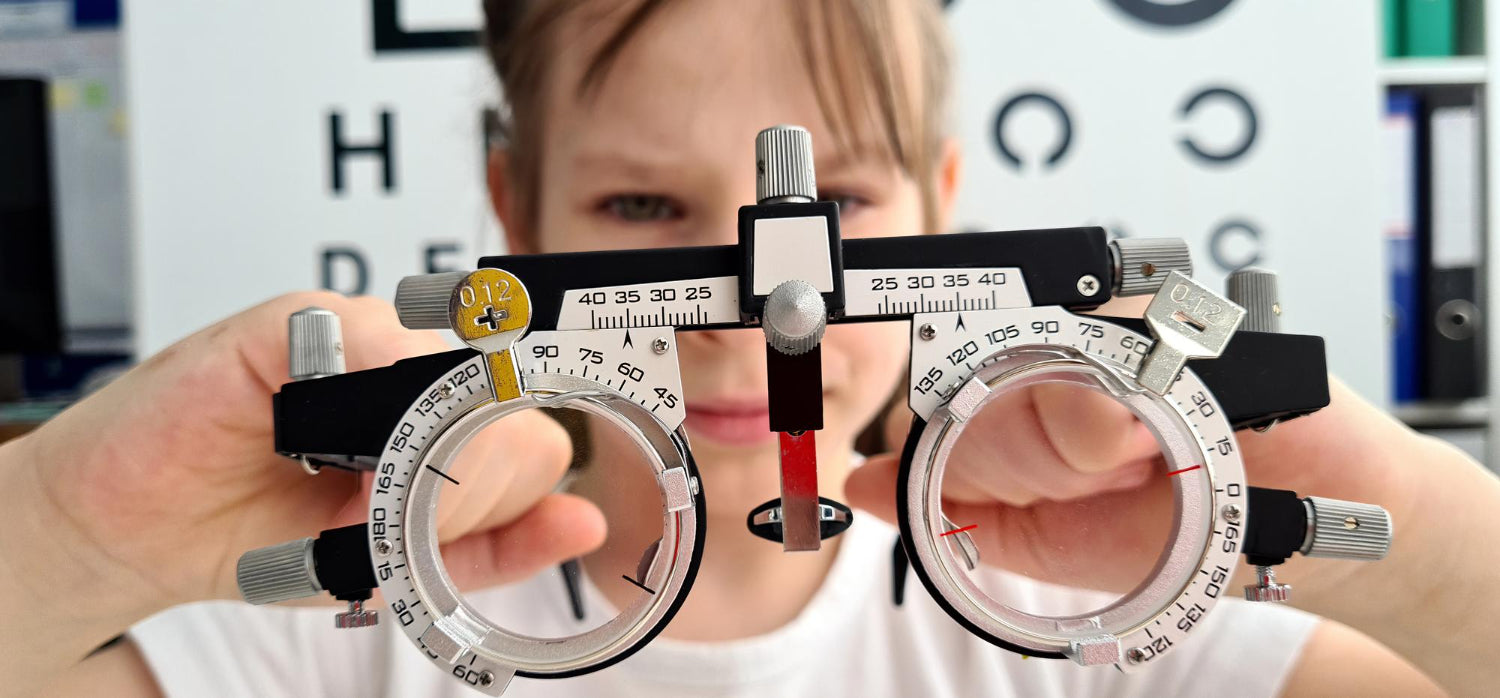
If your eye test report reads 6/9, it means your distance vision is measurably below the 6/6 standard - roughly 30% less sharp than normal eyesight. It is not blindness or a severe impairment, but it is sub-normal vision, and most people who carry it pay a real cost: distant detail that should be effortless to read becomes a strain. Here is what a 6/9 reading actually means, what causes it, and why correcting it usually makes a meaningful difference.
6/9 vision means seeing at 6 metres what a person with normal 6/6 vision sees at 9 metres - your distance clarity is sub-normal, roughly 30% below the standard. It is not blindness or severe loss, but it is below par.
This reading usually corresponds to a mild refractive error, often around −0.25 to −0.75 dioptres, though the exact power varies from person to person.
Many people "make do" with 6/9 vision, but it carries genuine functional deficits - difficulty reading TV screens, share-market tickers, live cricket scores, road signs, hoardings and airport display boards - and the constant squinting to compensate causes eye-muscle fatigue, lower productivity and irritation by the end of the day.
Because 6/9 leaves you short of full clarity, correction with glasses or contact lenses is usually advisable - and for driving, detailed professional work, or children in school, it is strongly recommended.
The notation comes from the snellen chart, the standard tool used in eye clinics around the world. The first number in 6/9 vision indicates the distance in metres from the eye chart - which is the fixed testing distance of 6 metres. The second number tells you the same distance at which a person with normal vision could read the same line you just barely managed.
Put concretely: a road sign that someone with perfect vision (6/6) reads clearly at 9 metres may only become clear for you at 6 metres. In countries using feet, 6/9 is equivalent to 20/30 visual acuity.
This level is classified as sub-normal distance vision - around 30% less sharp than 6/6. It is not legal blindness and not a severe eye disease, so there is no reason to panic. But it does mean your eyes are no longer resolving distant detail the way they should, and that gap shows up every time you try to read something far away.
6/9 is below normal eyesight. Plenty of adults carry it for years and tell themselves they are "managing" - but managing is not the same as seeing clearly. Close-up tasks like reading at arm's length or computer work at a fixed distance may feel fine, which is exactly why the problem is so easy to ignore.
The deficit shows up the moment distance matters: reading road signs and hoardings on the highway, following a share-market ticker or live cricket score on a TV across the room, catching your gate number on an airport display board, recognising faces across a hall, or reading a whiteboard from the back of a classroom. Under low light - dusk, rain, fog - that blur turns into a genuine handicap.
So is 6/9 vision "bad"?
It is sub-normal, and it should be taken seriously.
The biggest hidden cost is effort: to compensate for the blur, people unconsciously squeeze and squint their eyes to pull distant detail into focus. That constant strain tires the eye muscles, drains concentration and productivity, and leaves many people with headaches and irritation by the end of the day.
Eye strain, squinting, or headaches after sustained visual effort are signs that a full eye check-up is overdue. In children especially, even this mild drop can hold back academic performance if left uncorrected.
For driving, 6/9 meets the legal standard in many places - most Indian RTOs accept around 6/9 to 6/12 in the better eye with correction for private licences (verify your local state norms). But clearing the bare legal minimum is not the same as seeing the road well; most drivers are noticeably safer and more confident once corrected to 6/6.
A standard eye test uses a Snellen chart placed at a testing distance of 6 metres under controlled lighting. The ophthalmologist or optometrist covers one or both eyes in turn and asks you to read the smallest line of letters you can resolve. If the 6/9 line is the last one you can read, that becomes your vision score for that eye.
The denominator increases as sharpness decreases: 6/6 is normal, 6/9 is mild, 6/12 is moderate, and so on. For clinical precision, 6/9 converts to approximately logMAR +0.18 or a decimal acuity of 0.67.
But a comprehensive eye examination goes beyond the chart. It typically includes refraction (to determine the exact lens power needed), eye pressure measurement, and a basic health screening of the cornea and retina. Visual acuity charts measure only clarity, not other eye conditions such as glaucoma or retinal or nerve problems - which is why a full exam matters.
R. Kumar Opticians uses automated diagnostic tools in their Ahmedabad clinics to ensure precise readings before recommending glasses or contact lenses.
|
Vision Score |
What It Means |
Practical Impact |
|
6/6 |
You see at 6 m what normal vision sees at 6 m |
Benchmark for clear vision at distance |
|
6/9 |
You see at 6 m what normal vision sees at 9 m |
Slight blurring of distant objects; most daily tasks unaffected |
|
6/12 |
You see at 6 m what normal vision sees at 12 m |
Noticeable blur; often affects driving, classroom work |
The difference between each step reflects a measurable change in the minimum angle your eye can resolve. More importantly, a shift from 6/6 to 6/9 between two check-ups warrants a detailed eye exam - even if the drop feels minor in daily life.
Visual acuity (the Snellen reading) and lens power (measured in dioptres) are related but not interchangeable. There is no single fixed "6/9 vision power number" because the required correction depends on whether the cause is myopia, hyperopia, astigmatism, or a combination - and on the unique anatomy of each eye.
That said, 6/9 vision often falls between −0.25 and −0.50 dioptres of spherical correction for mild myopia. Some sources extend this range to −0.75 D when astigmatism is also present. These are approximations, not rules. Two people with the same 6/9 reading can need different prescription strengths depending on pupil size, corneal shape, and overall eye health.
Only a proper refraction test by an eye specialist can convert your 6/9 reading into an accurate lens prescription for spectacles or contact lenses. The underlying refractive error determines everything.
6/9 vision is often caused by mild refractive errors, though lifestyle and age-related factors also play a role. Here are the most frequent culprits.
Refractive errors occur when light does not focus precisely on the retina. In myopia, the focal point falls in front of the retina, making distant objects slightly blurred while near work stays comfortable. Hyperopia places focus behind the retina, leading to strain especially during near tasks. Astigmatism - uneven corneal curvature - distorts images in specific orientations.
Common refractive errors include myopia and astigmatism as the leading causes behind 6/9 readings. Many first-time visitors to an optometry clinic discover a small myopic or astigmatic correction during their initial detailed exam. A mild refractive error in this range is almost always correctable with the right lenses.
In people typically above 50–55 years, early cataract formation can lead to 6/9 vision by gradually clouding the natural lens. The symptoms are often subtle at first: slight haziness in night vision, increased glare from oncoming headlights, and mild difficulty with fine print.
When cataract progresses, cataract surgery can usually restore visual clarity. Until then, mild cataract-related 6/9 may be monitored with regular comprehensive eye exams. Older readers experiencing new visual complaints should seek a dilated examination to check lens and retinal health.
Long hours on laptops, smartphones, and tablets cause digital eye strain and temporary vision dips that sometimes measure around 6/9, particularly at the end of a workday. Digital eye strain can worsen existing vision problems and may contribute to blurred vision through focusing fatigue and reduced blink rate.
Dry eye syndrome can cause temporary vision blurriness that fluctuates with blinking. Eye drops can alleviate symptoms related to 6/9 vision caused by surface dryness. The 20-20-20 rule - every 20 minutes, look at something 20 feet away for 20 seconds - combined with proper screen distance helps reduce the impact of excessive screen use on visual performance.
6/9 vision affects daily life more than most people realise. Because the eyes still handle near tasks comfortably, the distance deficit often goes unnoticed - until you find yourself squinting at a TV screen, a road sign, or an airport board. The impact depends on age, occupation, and how much your day demands of your distance vision, but the effort of constantly compensating for the blur is a cost almost everyone with 6/9 pays, whether they register it or not.
Distance clarity matters on the road. At highway speeds, reading road signs and spotting hazards requires quick recognition of distant details. Driving with 6/9 vision may require glasses for safety, particularly at night or in rain when contrast drops further. 6/9 vision is generally considered acceptable for driving in many regions, but many drivers feel more confident with proper correction that brings them to 6/6.
Sports like cricket, tennis, and football rely on tracking fast-moving objects at varying distances. Even mild blurring in one or both eyes can affect performance. Contact lenses are often preferred by athletes who want sharp vision without the weight of frames - R. Kumar Opticians offers lens-fitting consultations for this purpose.
6/9 is a distance measurement. Your reading vision at close range may be perfectly fine, especially if you are young. But if myopia is combined with digital eye strain from excessive screen time on digital screens, eye fatigue and headaches after long sessions become common.
Properly prescribed spectacles or contact lenses reduce strain during long workdays, especially with anti-reflective or blue-light coatings. Pairing premium lenses with designer frames from brands like Tom Ford, Dior, or Bottega Veneta lets you combine comfort with aesthetics - a practical consideration for professionals who spend hours in meetings or on video calls.
Because 6/9 is sub-normal vision, correction is the right call for most people - and the case for it gets stronger with every demand you place on your distance vision. Whether it is essential in your case depends on:
Whether you experience headaches, eye strain, or blurry vision during daily tasks
How much driving you do, especially at night
Whether your work demands sustained distance clarity or fine detail
Your personal preference for visual clarity versus living without glasses
In children, 6/9 vision may require glasses to prevent learning difficulties and support healthy visual development - early detection is critical. In adults, asymptomatic stable 6/9 might be observed, but regular eye exams every 12 months are vital to track changes. Symptoms like eye strain may indicate a need for glasses even when the acuity drop seems small.
Wearing glasses remains the simplest, safest way to correct 6/9 vision back to 6/6 in most cases of refractive error. Glasses can correct mild refractive errors like 6/9 vision and enhance clarity for tasks needing sharp distance vision.
First-time wearers often prefer lightweight frames for everyday comfort, while fashion-conscious clients can explore statement pieces from brands like Gucci, Cartier, or Saint Laurent. Lens enhancements - anti-reflective coating, UV protection, blue-light filters - add practical value, especially for students and professionals. You can browse eyeglasses online to explore options before visiting in store.
Contact lenses can also correct 6/9 vision effectively, sitting directly on the eye to provide a wider field of view and freedom from frames. Soft daily disposables work well for busy professionals and travellers. People with astigmatism-related 6/9 may need toric lenses for optimal vision. Hygiene and safe wearing time are non-negotiable - learn more about best practices for contact lens use.
Refractive surgery options include LASIK for 6/9 vision caused by stable myopia or astigmatism. But 6/9 vision is too small a correction that may warrant refractive surgery. Suitability depends on corneal thickness, prescription stability, and overall eye health - a full pre-surgical assessment by an ophthalmologist is essential.
Healthy habits support eye health and comfort, but they cannot reliably cure structural refractive errors. Eye exercises cannot reshape the cornea or change eye length. If your 6/9 reading stems from true myopia or astigmatism, glasses or contact lenses or refractive surgery remain the proven routes to clear vision.
However, if 6/9 results from temporary factors - focusing fatigue, dry eyes after a long screen session - resting the eyes, using lubricating drops, and improving your environment may restore 6/6 without permanent correction. The distinction matters, and only an eye doctor can tell you which category you fall into.
You can practice eye exercises to manage strain, not to fix optics. The 20-20-20 rule is the most practical routine: every 20 minutes, shift focus to an object about 20 feet away for 20 seconds. Gentle focusing shifts between a near object and a distant one across the room help relax accommodative muscles.
These routines do not change your prescription. They reduce symptoms - tired eyes, headaches, fluctuating blur - that come from prolonged near work. Set your screen at arm's length, position the top of your monitor at or slightly below eye level, and minimise glare.
To maintain optimal eye health and support eye health long-term, include foods rich in vitamin A (carrots, spinach), vitamin C (citrus), vitamin E (nuts), and omega-3 fatty acids (oily fish). These nutrients support retinal health and tear film stability.
Outdoor UV exposure accelerates lens and retinal damage. Quality UV-protective sunglasses - from brands like Ray-Ban, Maui Jim, Oakley, or Prada - are essential in India's strong sunlight. Regular exercise, adequate sleep, and avoiding smoking round out the foundation of healthy eyesight and help reduce the risk of conditions like cataracts and macular degeneration.
Anyone who receives a 6/9 reading for the first time should schedule a comprehensive eye examination, especially if it comes with symptoms. Regular eye exams are essential for managing 6/9 vision over time.
Watch for these warning signs that need urgent attention:
Sudden drop in acuity or vision problems that appear overnight
Flashes, floaters, or loss of peripheral vision
Eye pain or unusual redness
Double vision in one or both eyes
Children and teenagers with persistent 6/9 should be monitored closely to prevent learning or developmental issues. Adults over 40 face increasing risk of glaucoma, early cataract, diabetic eye disease, and conditions linked to high blood pressure - periodic exams matter even if 6/9 feels stable and your healthy vision seems intact. Early detection of any underlying issue is always better than waiting for vision impairment to become obvious.
In many regions, 6/9 vision meets the legal driving standard for private vehicles. Most Indian RTOs accept around 6/9 to 6/12 in the better eye with glasses or contact lenses. However, rules vary by state and vehicle category, so always check the latest Motor Vehicles Department guidelines in your area. Even if 6/9 is technically acceptable, many drivers find that proper correction to 6/6 improves confidence on highways and during night driving.
Yes, in many cases. If a mild refractive error is the cause, the right pair of glasses or contact lenses prescribed after a comprehensive eye exam can restore optimal vision to 6/6. If the 6/9 reading is due to temporary digital eye strain or dry eye, treating those conditions and resting the eyes may bring you back to 6/6 without permanent correction.
Glasses are not strictly mandatory in every case, but 6/9 is sub-normal vision, so correction is usually worthwhile. Even when daily tasks feel manageable, most people are quietly compensating with extra effort - squinting, leaning in, tiring faster. If you have any symptoms, do meaningful driving, or your work demands distance clarity, correction is strongly advised.
Many people have slight differences between their eyes, and the brain compensates well in most cases. However, unequal vision can lead to eye fatigue, headaches, or reduced depth perception during prolonged tasks. In children, a persistent difference should be evaluated to rule out amblyopia. Customised prescriptions correcting each eye individually can balance the vision, reduce strain, and support healthy eyesight across both eyes.
Many patients achieve 6/6 after modern cataract surgery, but 6/9 can still be a good outcome depending on age, pre-existing retinal conditions and the type of intraocular lens used. Mild residual refractive error or corneal irregularities can limit final acuity to 6/9. A post-operative check-up can determine whether simple prescription glasses or contact lenses could refine this to 6/6


Selling Out Fast


Sunglasses do more than complete your look—they protect against UV damage, eye strain, and early aging. Discover the eye health benefits of wearing sunglasses.

With the sun's harmful UV rays threatening their delicate eyes, prescription sunglasses for children are an excellent solution. This blog will explore the advantages of prescription sunglasses for children.

Understanding your eyeglass prescription is key to maintaining good eye health. This guide explains how to read your prescription and what the different terms signify.
New Glasses could mean any of the following scenarios: You have been prescribed spectacles for the first time, and you...